
In-Depth Analysis of the Global State of Trade Affairs
The global trade landscape is in a state of unprecedented flux, defined by a radical shift in U.S. policy that has sent ripples across the world. The new “reciprocal tariff” regime, enacted through a series of Executive Orders and Presidential Proclamations, has fundamentally altered trade dynamics. The core of this policy is a baseline tariff on virtually all imports, with additional, often punitive, tariffs on countries that have a goods trade deficit with the United States. This has led to a widespread breakdown of the multilateral trading order and a cascade of retaliatory actions and hurried negotiations.
The most significant development is the effective date of the new U.S. tariffs, which took effect on August 7, 2025. This has created a new and uncertain environment for businesses, forcing them to navigate a complex web of tariffs, exemptions, and grace periods. Global trade flows have already begun to contract, with a sharp decline in seaborne trade volumes noted in July and August. The tariffs are also leading to inflation as the cost of imported goods increases, impacting a wide range of sectors from industrial raw materials to consumer goods. The situation is further complicated by the use of trade policy as a tool for political leverage and national security concerns, as seen in the U.S. tariffs on copper and steel.
United States and the World
The United States has moved aggressively to reshape its trade relations. The universal 10% baseline reciprocal tariff, initially announced in April, has been superseded by a more complex and varied system of country-specific tariffs. The most recent and significant changes were implemented on July 31, 2025, with an Executive Order that became effective on August 7, 2025. This order outlines a tiered system of tariffs, with some countries facing rates as high as 41%.
A key development is the temporary suspension of the de minimis exemption, effective August 29, 2025. This will eliminate duty-free treatment for low-value imports, a policy that had been a significant loophole for many e-commerce and direct-to-consumer businesses.
What is set to happen in the near future: The temporary suspension of the de minimis exemption is set to take effect on August 29, 2025. Negotiations with Canada are ongoing, with the U.S. having raised its tariff rate on Canadian imports to 35% on August 1, 2025. The U.S. is also continuing to negotiate with other countries, and the rates listed below are subject to change based on the outcome of those discussions.
Comprehensive Table of U.S. Tariffs by Country/Region (As of August 25, 2025)
| Country/Region | Reciprocal Tariff Rate (Ad Valorem) | Scope & Additional Information | Exceptions/Modifications |
| European Union (EU) | 15% (inclusive of MFN rate) | Applies to most EU-origin goods, serving as a maximum all-inclusive tariff rate. | Aircraft and parts, generic pharmaceuticals, and certain “unavailable natural resources” (e.g., cork) are subject only to MFN tariffs. Tariffs on automobiles and parts are also set for reduction in tandem with EU tariff reductions. |
| China | 10% (suspended until November 10, 2025) | Reciprocal tariff rate was suspended for a 90-day period. | An additional 20% tariff is in place on Chinese imports for the alleged failure to curb opioid exports. Tariffs on a vast range of goods remain in place from the previous administration. |
| Canada | 35% | Applies to Canadian imports, effective August 1, 2025. | USMCA-qualified goods continue to be exempt. |
| Mexico | Pause on additional tariffs | A 90-day pause on additional tariffs was announced on July 31, 2025. | The U.S. continues to seek a resolution to trade issues with Mexico. |
| Switzerland | 39% | Applied to nearly 60% of Swiss exports to the U.S., effective August 7, 2025. | Pharmaceuticals and gold are not subject to the 39% rate. The Swiss government is in talks to reduce this rate. |
| India | 25% | A 25% tariff is applied, which is a slight decrease from a previously announced higher rate. | An additional 25% on some goods is linked to India’s purchase of Russian oil. |
| All Other Countries | Varies (10% to 41%) | Rates are determined by the U.S. trade deficit with the country. Annex I of the Executive Order lists the rates for nearly 70 countries. | A 10% baseline tariff applies to countries not on the list. |
| Transshipped Goods | 40% (in lieu of other tariffs) | Applies to goods determined to have been transshipped to evade applicable duties. | This is an additional penalty and is not subject to mitigation or remission. |
| De Minimis Exemption | Suspended | Duty-free treatment for imports under $800 is suspended for all countries, effective August 29, 2025. | A flat rate of up to $200 per item will be applied, depending on the country’s tariff rate. |
Export to Sheets
China and the World
China’s trade policy is dominated by its ongoing trade dispute with the U.S. and its efforts to build new trade alliances. The temporary suspension of the U.S. reciprocal tariff on China is a major relief, but the underlying tensions remain. The suspension is set to expire on November 10, 2025, and there is a high degree of uncertainty about what will happen next.
In a move to counter U.S. pressure, China has been actively engaging with other nations. Notably, it has removed restrictions on exports of critical agricultural and industrial items, such as fertilizers and rare earth magnets, to India. This is part of a broader diplomatic effort to reset trade relations and strengthen its position in the region.
What is set to happen in the near future: The primary focus for China is the expiration of the U.S. reciprocal tariff suspension on November 10, 2025. China is expected to continue its strategy of diversification and strengthening its relationships with other trade partners to mitigate the risk of a full-scale trade war with the U.S.
Comprehensive Table of Chinese Tariffs by Country/Region (As of August 25, 2025)
| Country/Region | Average MFN Tariff Rate (Approx.) | Key Trade Agreements & Special Arrangements | Countermeasures against U.S. Tariffs |
| United States | High & Variable | No comprehensive trade agreement. | China has imposed retaliatory tariffs on a wide range of U.S. goods, with an average rate of 32.6% on 100% of U.S. goods. |
| European Union (EU) | Varies by product | A bilateral Comprehensive Agreement on Investment (CAI) is under negotiation. | No widespread retaliatory tariffs. However, trade relations remain strained over issues like market access and intellectual property rights. |
| India | Varies by product | Recent talks have led to the removal of export restrictions on some key items. | China has vocally opposed U.S. tariffs on India and has sought to strengthen trade ties. |
| Switzerland | Low or Zero | A free trade agreement (FTA) with Switzerland has been in effect since 2013, which has led to a decrease in tariffs. | N/A |
| ASEAN Members | Low or Zero | China has a Free Trade Area with ASEAN. | N/A |
| Australia & New Zealand | Varies by product | Both have Free Trade Agreements with China. | N/A |
| Other FTA Partners | Low or Zero | China has numerous FTAs with countries including Pakistan, Chile, and Peru. | N/A |
Export to Sheets
European Union and the World
The European Union has successfully negotiated a new trade framework with the U.S. to mitigate the impact of the new tariff regime. A joint statement was released on August 21, 2025, outlining the terms of the agreement. This deal establishes a clear 15% maximum tariff rate for most EU goods entering the U.S., which is a significant win compared to the higher rates faced by other countries. In exchange, the EU will eliminate tariffs on U.S. industrial goods and provide preferential access for certain agricultural products.
The EU is also pursuing a strategy of “open strategic autonomy” to diversify its trading partners. The EU-Mercosur Agreement, which is still pending ratification, and ongoing negotiations with India, are key to this strategy.
What is set to happen in the near future: The EU is set to formally introduce the necessary legislative proposal to enact the tariff reductions agreed upon with the U.S. This will trigger a reciprocal reduction of U.S. tariffs on European automobiles and parts. The EU’s trade policy will also be increasingly shaped by its own internal regulations, such as the EUDR, which will impact imports of commodities linked to deforestation.
Comprehensive Table of EU Tariffs by Country/Region (As of August 25, 2025)
| Country/Region | EU’s Common External Tariff (CET) | Key Trade Agreements & Arrangements | Special Notes |
| United States | Low (for industrial goods) | The EU-U.S. framework agreement, released on August 21, 2025, is the new foundation of the trade relationship. | The EU will eliminate tariffs on all U.S. industrial goods. The U.S. will apply a 15% tariff ceiling on most EU goods. |
| Switzerland | Low (for industrial goods) | The EU and Switzerland have a 1972 FTA and a series of bilateral agreements. | Trade relations are currently subject to negotiations aimed at creating a new institutional framework. |
| China | Varies by product | No comprehensive trade agreement, but a bilateral Comprehensive Agreement on Investment (CAI) has been under negotiation. | The EU is addressing concerns about market access and intellectual property rights with China. |
| Mercosur Bloc | Low or Zero (pending ratification) | The EU-Mercosur Agreement aims to eliminate tariffs on over 90% of goods traded. | The agreement is under scrutiny due to environmental concerns. |
| Japan | Low or Zero | The EU-Japan Economic Partnership Agreement (EPA) has eliminated most tariffs. | N/A |
| South Korea | Low or Zero | The EU-Korea Free Trade Agreement has eliminated tariffs on a wide range of goods. | N/A |
| United Kingdom | Varies by product | The EU-UK Trade and Cooperation Agreement governs trade relations post-Brexit. | N/A |
Export to Sheets
Switzerland and the World
Switzerland has been particularly hard-hit by the new U.S. tariff regime. On August 7, 2025, a punitive 39% tariff was imposed on a significant portion of Swiss exports to the U.S. This is a much higher rate than the 15% faced by the EU and other key U.S. allies. The Swiss government has acknowledged this but has so far refrained from implementing retaliatory measures, choosing instead to continue negotiations with the U.S.
Switzerland’s trade policy remains focused on free trade and diversification. It is a member of EFTA and has a large network of bilateral FTAs, including with China and Japan. The country’s economic relations with the EU are crucial, and negotiations are underway to address structural issues in their bilateral agreements.
What is set to happen in the near future: The Swiss government is actively negotiating with the U.S. to get the 39% tariff rate reduced to a level closer to that of the EU and Japan. The outcome of these negotiations will be critical for Switzerland’s export-oriented economy. Additionally, ongoing talks with the EU on a new institutional framework will be a major determinant of future trade relations.
Comprehensive Table of Swiss Tariffs by Country/Region (As of August 25, 2025)
| Country/Region | MFN Tariff Rate | Key Trade Agreements & Arrangements | Special Notes |
| European Union (EU) | Low or Zero | A 1972 FTA and a series of bilateral agreements govern the relationship. | Negotiations for a new institutional framework are underway. |
| EFTA Members | Zero | As an EFTA member, Switzerland has free trade in industrial goods with Norway, Iceland, and Liechtenstein. | Agricultural trade is governed by separate bilateral agreements. |
| United States | Varies, high on specific goods | No comprehensive FTA in place. | A new 39% tariff was imposed on nearly 60% of Swiss exports, effective August 7, 2025. Pharmaceuticals and gold are exceptions. |
| China | Low or Zero | A bilateral FTA with China has been in effect since 2013. | The agreement has led to a significant decrease in tariffs and non-tariff barriers. |
| Japan | Low or Zero | The Agreement on Free Trade and Economic Partnership has been in effect since 2009. | N/A |
| India | High (for non-FTA products) | Negotiations for an FTA are ongoing. | An FTA would significantly benefit sectors like watches and machinery. |
| Mercosur Bloc | High (for non-FTA products) | Negotiations for an FTA are ongoing. | N/A |
References
“EU and US Announce Framework Trade Agreement,” Baker McKenzie, August 22, 2025, https://sanctionsnews.bakermckenzie.com/eu-and-us-announce-framework-trade-agreement/
“US-India trade: Tariffs to hit leather sector; Kolkata exporters pondering ‘Made in Europe’ question,” The Times of India, August 23, 2025, https://timesofindia.indiatimes.com/business/india-business/us-india-trade-tariffs-to-hit-leather-sector-kolkata-exporters-pondering-made-in-europe-question/articleshow/123475736.cms
“August 27 countdown begins: Will Trump drop the final 25% tariff bomb on India?” The Economic Times, August 25, 2025, https://economictimes.indiatimes.com/markets/stocks/news/august-27-countdown-begins-will-trump-drop-the-final-25-tariff-bomb-on-india/articleshow/123496356.cms
“Latest on US tariffs,” Australian Government Department of Foreign Affairs and Trade, https://www.dfat.gov.au/trade/trade-and-investment/latest-us-tariffs
“EU and US publish Joint Statement on transatlantic trade and investment,” European Commission, August 21, 2025, https://ec.europa.eu/commission/presscorner/detail/en/ip_25_1973
“Trump Tariff Shake-Up: New Reciprocal Tariffs and the Elimination of the De Minimis Exemption,” Baker Botts, August 1, 2025, https://www.bakerbotts.com/thought-leadership/publications/2025/august/trump-tariff-shake-up-new-reciprocal-tariffs-and-the-elimination-of-the-de-minimis-exemption
“President Trump Announces New Reciprocal Tariffs Set to Take Effect This Week,” WilmerHale, August 4, 2025, https://www.wilmerhale.com/en/insights/client-alerts/20250804-president-trump-announces-new-reciprocal-tariffs–set-to-take-effect-this-week
“Weekly China Insight – 15 August 2025,” Kreab, August 15, 2025, https://kreab.com/beijing/insight/weekly-china-insight-15-august-2025/
“Switzerland Vows to “Adapt Negotiations” to Reach Trade Deal with U.S.,” Sandler, Travis & Rosenberg, P.A., August 7, 2025, https://www.strtrade.com/trade-news-resources/str-trade-report/trade-report/august/switzerland-vows-to-adapt-negotiations-to-reach-trade-deal-with-u-s
“US tariffs: Federal Council to adapt negotiations,” news.admin.ch, August 4, 2025, https://www.news.admin.ch/en/newnsb/FN7e_NNC_Sbbj3-yLKunq
“Switzerland enters free trade deal with Mercosur to boost exports,” Greater Geneva Bern area, July 7, 2025, https://ggba.swiss/en/switzerland-enters-free-trade-deal-with-mercosur-to-boost-exports/

As of August 25, 2025, the global trade environment is in a state of major disruption due to the United States’ new reciprocal tariff regime. This policy has led to varied responses and a complex, fluid set of trade agreements and tariffs across the world.
The Global State of Affairs in Trade and Tariffs
The current global trade landscape is defined by the significant shift away from multilateralism. The U.S. has implemented a new and intricate reciprocal tariff regime that applies a baseline tariff on all imports and higher, country-specific tariffs to those with a trade deficit. This has created a cascade of retaliatory tariffs, hurried negotiations, and a general rise in protectionism. The traditional pillars of the post-war trading order are being sidelined in favor of bilateral deals and unilateral actions. As of August 7, 2025, the new U.S. tariff rates, which vary from 10% to 41%, have taken effect. This has been compounded by the suspension of the de minimis exemption on August 29, 2025, which will eliminate duty-free treatment for low-value imports. These policies are causing a slowdown in global trade flows and contributing to inflation.
United States and the World
The U.S. is the primary driver of the current trade shifts. The administration’s new reciprocal tariff regime, effective August 7, 2025, has introduced a tiered system of tariffs. The goal is to correct what the U.S. views as unfair trade practices and persistent trade deficits. The most recent significant development is the Joint Statement on a United States-European Union framework on an agreement on reciprocal, fair and balanced trade, which sets a 15% tariff ceiling on most EU goods, a significant concession compared to other nations.
What is set to happen in the near future:
- The suspension of the de minimis exemption will take effect on August 29, 2025, impacting e-commerce and direct-to-consumer imports.
- A 90-day pause on additional tariffs for Mexico is set to end in October, with negotiations ongoing.
- The U.S. will continue to negotiate with other countries, and tariff rates are subject to change.
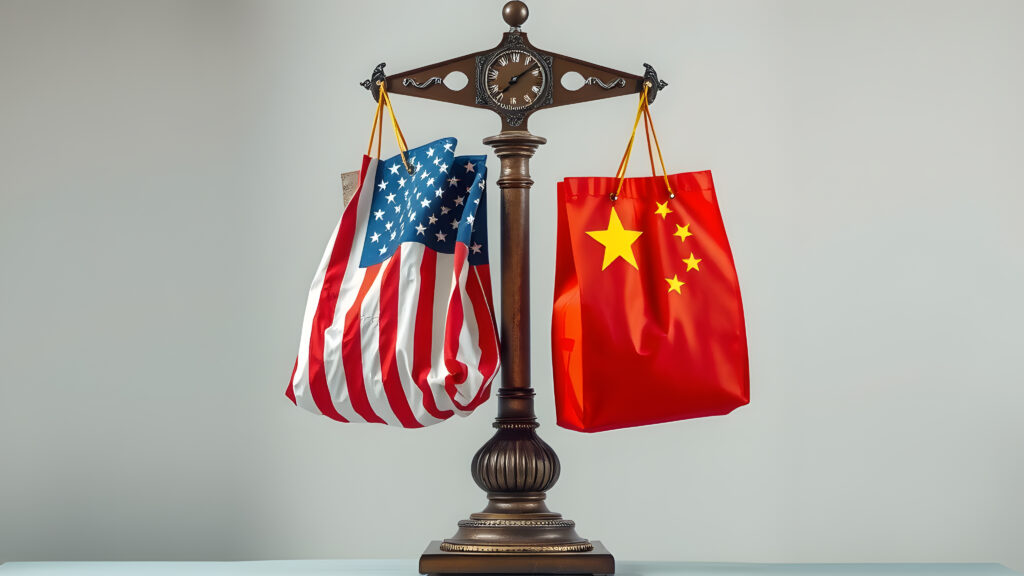
Comprehensive Table of U.S. Tariffs by Country/Region (As of August 25, 2025)
| Country/Region | Reciprocal Tariff Rate (Ad Valorem) | Scope & Additional Information | Exceptions/Modifications |
| European Union (EU) | 15% (inclusive of MFN rate) | Applies to most EU-origin goods. Serves as a maximum all-inclusive tariff rate. | Aircraft and parts, generic pharmaceuticals, and certain “unavailable natural resources” are subject only to MFN tariffs. Tariffs on automobiles and parts are set for reduction in tandem with EU tariff reductions. |
| China | 10% (suspended until Nov 10, 2025) | Reciprocal tariff rate was suspended. Additional tariffs from previous administrations remain in place. | An additional 20% tariff is in place on Chinese imports for the alleged failure to curb opioid exports. |
| Canada | 35% | Applies to Canadian imports, effective August 1, 2025. | USMCA-qualified goods continue to be exempt. |
| Mexico | Pause on additional tariffs | A 90-day pause on additional tariffs was announced on July 31, 2025. | The U.S. is seeking a trade resolution with Mexico before the pause ends. |
| Switzerland | 39% | Applied to nearly 60% of Swiss exports to the U.S., effective August 7, 2025. | Pharmaceuticals and gold are not subject to the 39% rate. |
| India | 25% | A 25% tariff is applied. | An additional 25% on some goods is linked to India’s purchase of Russian oil. |
| All Other Countries | Varies (10% to 41%) | Rates are determined by the U.S. trade deficit with the country. Annex I of the Executive Order lists the rates for nearly 70 countries. | A 10% baseline tariff applies to countries not on the list. |
| Transshipped Goods | 40% (in lieu of other tariffs) | Applies to goods determined to have been transshipped to evade applicable duties. | This is an additional penalty and is not subject to mitigation or remission. |
Export to Sheets
China and the World
China’s trade policy is dominated by its ongoing trade dispute with the U.S. and its efforts to build new trade alliances. The temporary suspension of the U.S. reciprocal tariff on China is a major relief, but the underlying tensions remain. In a strategic move, China has been actively engaging with other nations, particularly India, to diversify its export markets and reduce its reliance on the U.S.
What is set to happen in the near future:
- The primary focus is the expiration of the U.S. reciprocal tariff suspension on November 10, 2025. It is highly uncertain what will happen after this date.
- China is expected to continue its strategy of building trade relationships with other nations, particularly in Asia, to mitigate the risk of a full-scale trade war with the U.S.
Comprehensive Table of Chinese Tariffs by Country/Region (As of August 25, 2025)
| Country/Region | Average MFN Tariff Rate (Approx.) | Key Trade Agreements & Special Arrangements | Countermeasures against U.S. Tariffs |
| United States | High & Variable | No comprehensive trade agreement. | Retaliatory tariffs on a wide range of U.S. goods, with an average rate of 32.6% on 100% of U.S. goods. |
| European Union (EU) | Varies by product | A bilateral Comprehensive Agreement on Investment (CAI) is under negotiation. | No widespread retaliatory tariffs. |
| India | Varies by product | Recent talks have led to the removal of export restrictions on some key items like fertilizers and rare earth magnets. | China has vocally opposed U.S. tariffs on India and sought to strengthen trade ties. |
| Switzerland | Low or Zero | A free trade agreement (FTA) with Switzerland has been in effect since 2013. | N/A |
| ASEAN Members | Low or Zero | China has a Free Trade Area with the Association of Southeast Asian Nations (ASEAN). | N/A |
| Australia & New Zealand | Varies by product | Both have Free Trade Agreements with China. | N/A |
| Other FTA Partners | Low or Zero | China has numerous FTAs with countries including Pakistan, Chile, and Peru. | N/A |
Export to Sheets
European Union and the World
The European Union has successfully negotiated a new trade framework with the U.S., announced on August 21, 2025. This deal is seen as a way to avoid a full-blown trade war. In exchange for a 15% tariff ceiling on most of its goods, the EU will eliminate tariffs on all U.S. industrial goods and provide preferential access for certain agricultural products. The EU is also actively pursuing its own “open strategic autonomy” by diversifying its trading partners and negotiating new free trade agreements.
What is set to happen in the near future:
- The EU is expected to introduce the necessary legislative proposal to enact the tariff reductions, which will trigger reciprocal reductions from the U.S. on automobiles.
- The EU will continue negotiations for new trade deals with other partners, such as India, and implement regulations like the EU Deforestation Regulation (EUDR).
Comprehensive Table of EU Tariffs by Country/Region (As of August 25, 2025)
| Country/Region | EU’s Common External Tariff (CET) | Key Trade Agreements & Arrangements | Special Notes |
| United States | Low (for industrial goods) | The EU-U.S. framework agreement, released on August 21, 2025, is the new foundation of the trade relationship. | The EU will eliminate tariffs on all U.S. industrial goods. The U.S. will apply a 15% tariff ceiling on most EU goods. |
| Switzerland | Low (for industrial goods) | The EU and Switzerland have a 1972 FTA and a series of bilateral agreements. | Trade relations are currently subject to negotiations to create a new institutional framework. |
| China | Varies by product | No comprehensive trade agreement. A bilateral Comprehensive Agreement on Investment (CAI) is under negotiation. | N/A |
| Mercosur Bloc | Low or Zero (pending ratification) | The EU-Mercosur Agreement aims to eliminate tariffs on over 90% of goods traded. | The agreement is under scrutiny due to environmental concerns. |
| Japan | Low or Zero | The EU-Japan Economic Partnership Agreement (EPA) has eliminated most tariffs. | N/A |
| South Korea | Low or Zero | The EU-Korea Free Trade Agreement has eliminated tariffs on a wide range of goods. | N/A |
Export to Sheets
Switzerland and the World
Switzerland has been particularly hard-hit by the new U.S. tariff regime. On August 7, 2025, a punitive 39% tariff was imposed on a significant portion of Swiss exports to the U.S., a much higher rate than the 15% faced by the EU. The Swiss government has not implemented retaliatory measures and is instead focusing on negotiations to get the rate reduced. As a major trading nation, Switzerland has an extensive network of free trade agreements (FTAs), including with China and Japan.
What is set to happen in the near future:
- The Swiss government is actively negotiating with the U.S. to reduce the 39% tariff rate.
- Ongoing talks with the EU for a new institutional framework will be a major determinant of future trade relations.
Comprehensive Table of Swiss Tariffs by Country/Region (As of August 25, 2025)
| Country/Region | MFN Tariff Rate | Key Trade Agreements & Arrangements | Special Notes |
| European Union (EU) | Low or Zero | A 1972 FTA and a series of bilateral agreements govern the relationship. | Negotiations for a new institutional framework are underway. |
| EFTA Members | Zero | As an EFTA member, Switzerland has free trade in industrial goods with Norway, Iceland, and Liechtenstein. | Agricultural trade is governed by separate bilateral agreements. |
| United States | Varies, high on specific goods | No comprehensive FTA in place. | A new 39% tariff was imposed on nearly 60% of Swiss exports, effective August 7, 2025. Pharmaceuticals and gold are exceptions. |
| China | Low or Zero | A bilateral FTA with China has been in effect since 2013. | The agreement has led to a significant decrease in tariffs and non-tariff barriers. |
| Japan | Low or Zero | The Agreement on Free Trade and Economic Partnership has been in effect since 2009. | N/A |
| India | High (for non-FTA products) | Negotiations for an FTA are ongoing. | An FTA would significantly benefit sectors like watches and machinery. |
References & SEO
References
- “US-India trade: Tariffs to hit leather sector; Kolkata exporters pondering ‘Made in Europe’ question,” The Times of India, August 23, 2025, https://timesofindia.indiatimes.com/business/india-business/us-india-trade-tariffs-to-hit-leather-sector-kolkata-exporters-pondering-made-in-europe-question/articleshow/123475736.cms
- “August 27 countdown begins: Will Trump drop the final 25% tariff bomb on India?” The Economic Times, August 25, 2025, https://economictimes.indiatimes.com/markets/stocks/news/august-27-countdown-begins-will-trump-drop-the-final-25-tariff-bomb-on-india/articleshow/123496356.cms
- “Latest on US tariffs,” Australian Government Department of Foreign Affairs and Trade, https://www.dfat.gov.au/trade/trade-and-investment/latest-us-tariffs
- “EU and US publish Joint Statement on transatlantic trade and investment,” European Commission, August 21, 2025, https://ec.europa.eu/commission/presscorner/detail/en/ip_25_1973
- “Trump Tariff Shake-Up: New Reciprocal Tariffs and the Elimination of the De Minimis Exemption,” Baker Botts, August 1, 2025, https://www.bakerbotts.com/thought-leadership/publications/2025/august/trump-tariff-shake-up-new-reciprocal-tariffs-and-the-elimination-of-the-de-minimis-exemption
- “President Trump Announces New Reciprocal Tariffs Set to Take Effect This Week,” WilmerHale, August 4, 2025, https://www.wilmerhale.com/en/insights/client-alerts/20250804-president-trump-announces-new-reciprocal-tariffs–set-to-take-effect-this-week
- “Weekly China Insight – 15 August 2025,” Kreab, August 15, 2025, https://kreab.com/beijing/insight/weekly-china-insight-15-august-2025/
- “Switzerland Vows to “Adapt Negotiations” to Reach Trade Deal with U.S.,” Sandler, Travis & Rosenberg, P.A., August 7, 2025, https://www.strtrade.com/trade-news-resources/str-trade-report/trade-report/august/switzerland-vows-to-adapt-negotiations-to-reach-trade-deal-with-u-s
- “US tariffs: Federal Council to adapt negotiations,” news.admin.ch, August 4, 2025, https://www.news.admin.ch/en/newnsb/FN7e_NNC_Sbbj3-yLKunq
- “Switzerland enters free trade deal with Mercosur to boost exports,” Greater Geneva Bern area, July 7, 2025, https://ggba.swiss/en/switzerland-enters-free-trade-deal-with-mercosur-to-boost-exports/
- “EU and US Announce Framework Trade Agreement,” Baker McKenzie, August 22, 2025, https://sanctionsnews.bakermckenzie.com/eu-and-us-announce-framework-trade-agreement/
#SEO
#TradeWars #Tariffs #GlobalTrade #USChinaTrade #EUTariffs #SwitzerlandTrade #ReciprocalTariffs #TradePolicy #SupplyChain #ImportExport #InternationalRelations #EconomicPolicy #TradeAgreements #DonaldTrump #EUTradeDeal #ChinaTrade #SwitzerlandTariffs #IndiaTrade #DeMinimis #GlobalEconomy